




News

Ghana: 23,495 Test Positive For HIV In First Half Of 2022 – Official

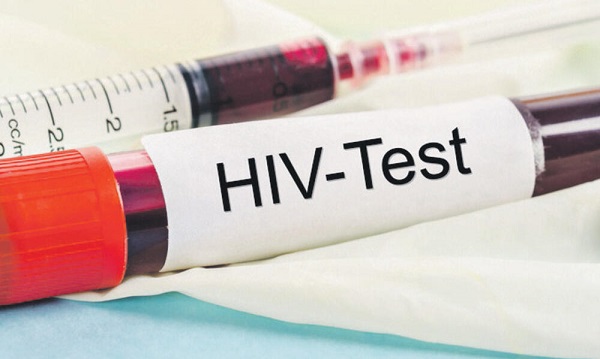
A total of 23,495 people in Ghana tested positive for HIV in the first half of this year (January to June).

The figure is two percent of the 948,094 people who undertook HIV testing from January to June 2022, the Programme Manager of the National STIs and HIV/AIDS Control Programme, Dr. Stephen Ayisi Addo said in a report filed by state newspaper, graphic online.
“The figure for this new infection is too high, so we need to intensify education to let people know that HIV is still real; …We have to let people know that they need to stick to the prevention strategies…,” he said.

Dr. Ayisi Addo said most of the 23,495 people who tested positive had since been put on HIV treatment.

He attributed the figures to complacency and ignorance explaining that awareness creation on the part of health workers had decreased.

“Some youth today don’t know HIV is there. Some know, but they have assumed that it’s gone. People are now more afraid of COVID-19 and the Marburg fever than they are of AIDS,” he pointed out.

Overall, he said, as of December 2021, the estimated population of HIV-positive persons in the country was 350,000, with only 71 percent being identified by the control program.

Of that number, he noted, over 245,000, representing 99 percent, were on treatment as of June this year.

he said about 79 percent of those who had the disease and were taking their medication had reached the non-detectable that stage, which means they cannot transmit the virus to others.

Dr. Ayisi Addo added that the prevalence of the disease was higher in men who had sex with men, with a prevalence rate of 18 percent; in female Ashawo workers, with a prevalence of 4.6 percent.

Related posts

Ghana announces special life insurance cover for health workers

ICON

Parliament approved $35 million facility from World Bank

ICON

Ghana will receive €100 million this year from the German government under its ‘Compact with Africa’ Programme to support the country’s renewable energy sector. Germany is providing the funding through its technical cooperation agency, GIZ, and development bank, KfW. The two countries are currently finalising modalities of the financial support which will include technical and vocational training for Ghanaians in the renewable energy sector. Event The Deputy Head of Mission at the German Embassy, Mr Hans-Helge Sander, disclosed this at the opening of the 2017 West Africa Clean Energy and Environment (WACEE) Exhibition and Conference in Accra on Tuesday. “Ghana has been named as one of the three countries in Africa to benefit from the bilateral reform partnership within the G-20 ‘Compact with Africa’ Programme. The initiative will bring up to an additional €100 million to support the renewable energy sector in Ghana,” he said. Mr Sander explained that the financial support was a government-to-government arrangement, which meant that the federal government would task GIZ and KfW to implement Germany’s contribution. “I am pointing this out because lately, several private companies have approached the embassy with requests for information about how the private sector can benefit from the German offer. As I said, there will be no direct opening for cooperation between the German government and private companies,” the deputy head of mission stated. However, he added that there would be options for participation through public tenders and calls for proposal when KfW, GIZ and the Ghanaian government start implementing the funding from the compact. Asked how the fund would be implemented, Mr Sander told the Daily Graphic that the implementation would be done through the Government-goes-Solar initiative or other programmes. “Details of the implementation are still under discussion between the two governments,” he added. Measures The Director In-charge of Renewable and Alternative Energy at the Ministry of Energy, Mr Wisdom Ahiataku-Togobo, who represented the minister of energy, said the government was putting in place policies and measures to help attract private sector investment into the renewable energy sector. “Ghana has followed the footsteps of Germany and has enacted a Renewable Energy Act which seeks to create the enabling environment for attracting private sector investment in renewable energy and energy efficiency,” he said. He said the country had also realised some modest growth in the renewable energy sector as it could now boast a 22.5-megawatt (MW) capacity of utility scale solar farm. “We can also boast a waste-to-energy power plant in operation at Ashaiman which has tremendously improved the sanitation situation in the Ashaiman District,” he said, adding that the government intended to replicate that in other districts.

ghwishradioadmin

This website uses cookies to improve your experience. We'll assume you're ok with this, but you can opt-out if you wish. Accept Read More

close

Enjoying this blog? Please Subscribe to other Channels & spread the word :)